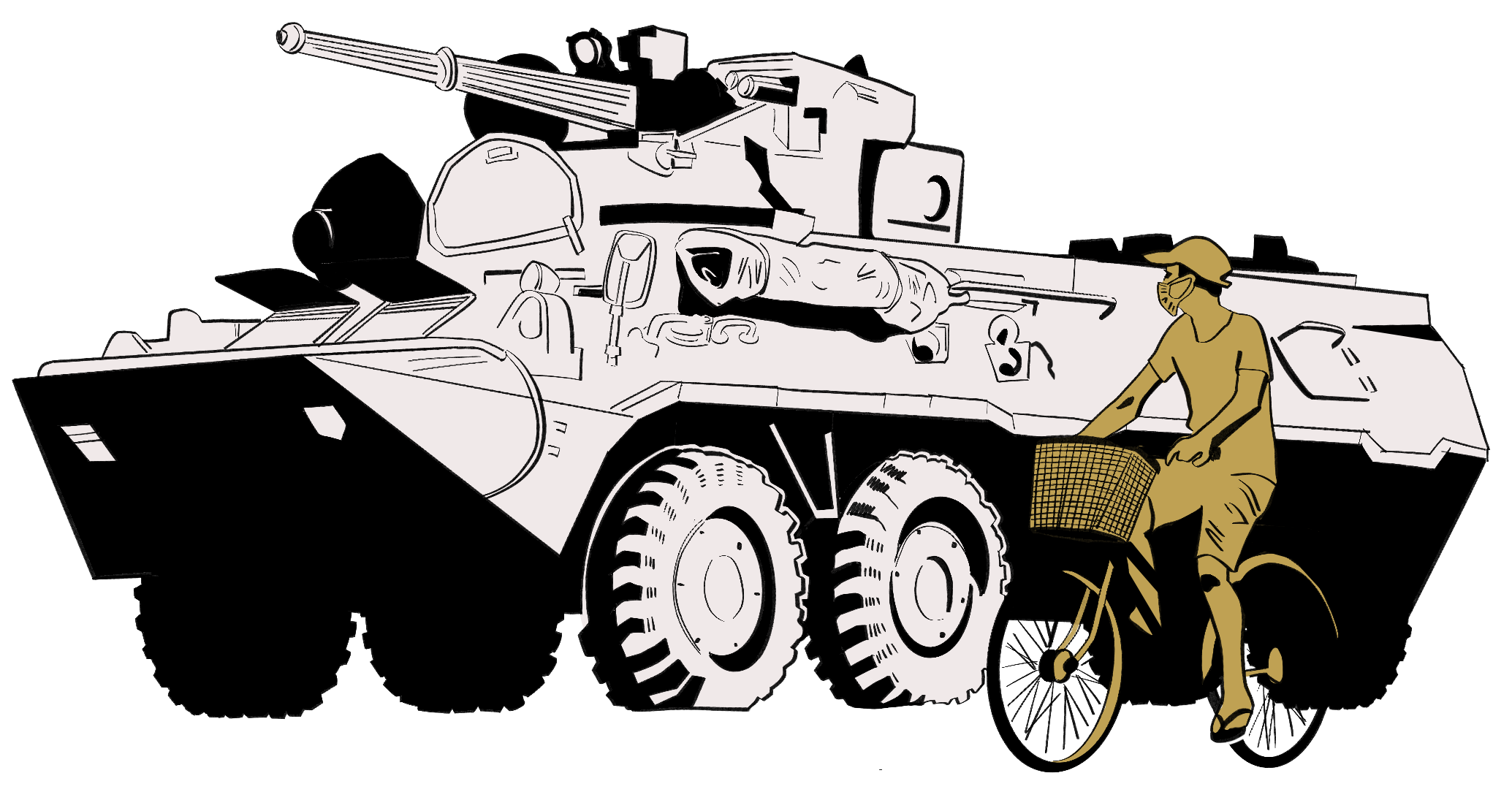
What led to Myanmar’s coup?
Despite a decade of celebrated democratic reforms, the threat of the military’s return to absolute power was long brewing beneath the surface
Myanmar Now
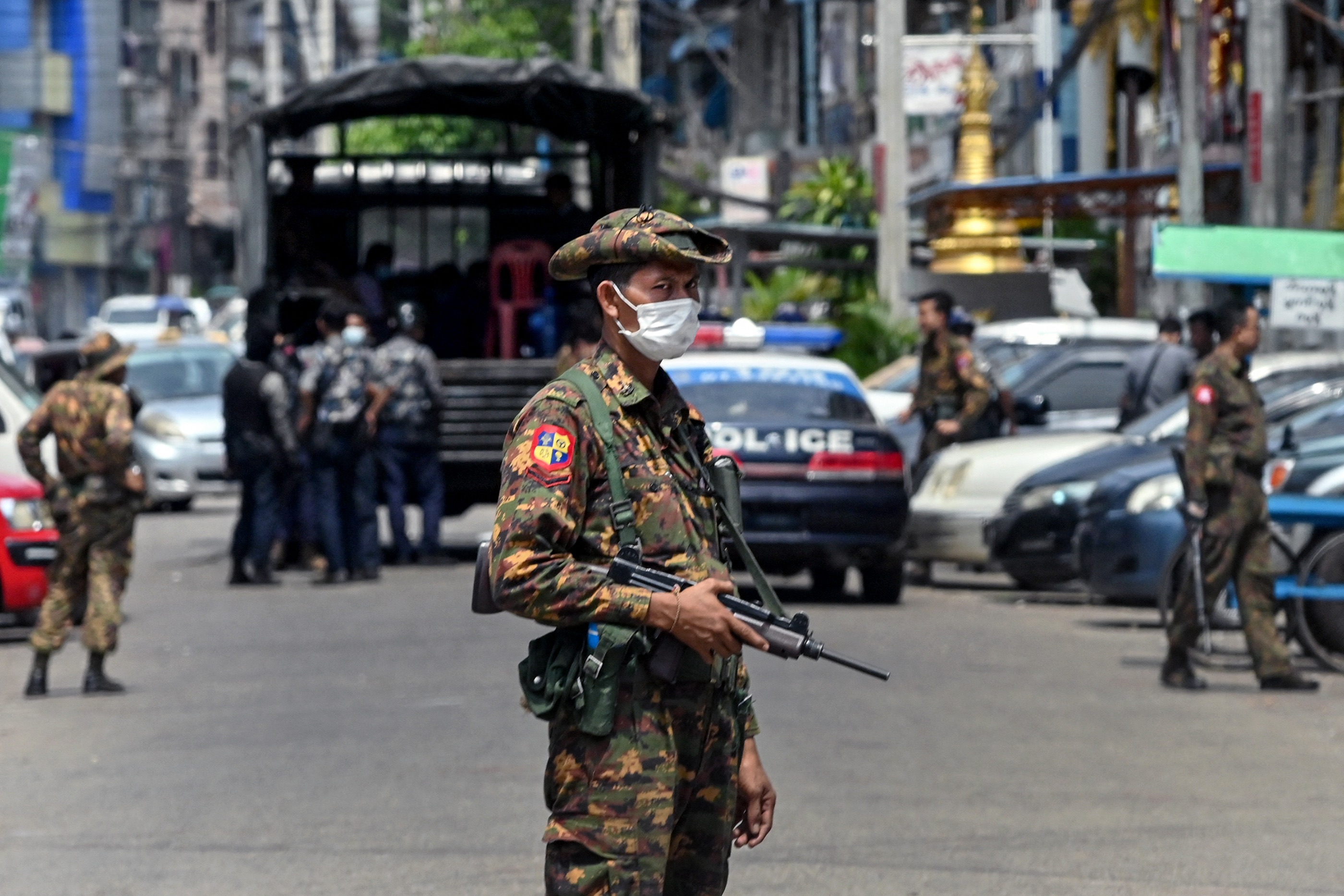
A soldier stands guard on a road as security forces search for protesters who took part in a demonstration against the military coup in Yangon in May 2021 (Photo: STR / AFP)
On January 29, 2017, a prominent Myanmar lawyer and icon of constitutional reform Ko Ni was shot in the head as he hailed a taxi at Yangon airport.
His assassination—by military affiliates—sent shockwaves through the country.
The brazen act was yet another indication that despite governance by an elected civilian administration, the Myanmar military was willing to use brute force to eliminate those who threatened its own carefully orchestrated place in politics.
Four years later almost to the day, the military staged a coup, shutting down what many now remember as Myanmar’s short experiment with democracy.
Ko Ni had been a long-time legal advisor to Aung San Suu Kyi, de-facto head of the National League for Democracy (NLD) government at that time. The lawyer was one of Myanmar’s most outspoken advocates for legal reform, highlighting the deep flaws of the undemocratic military-drafted 2008 Constitution and the extreme built-in difficulties of amending it.
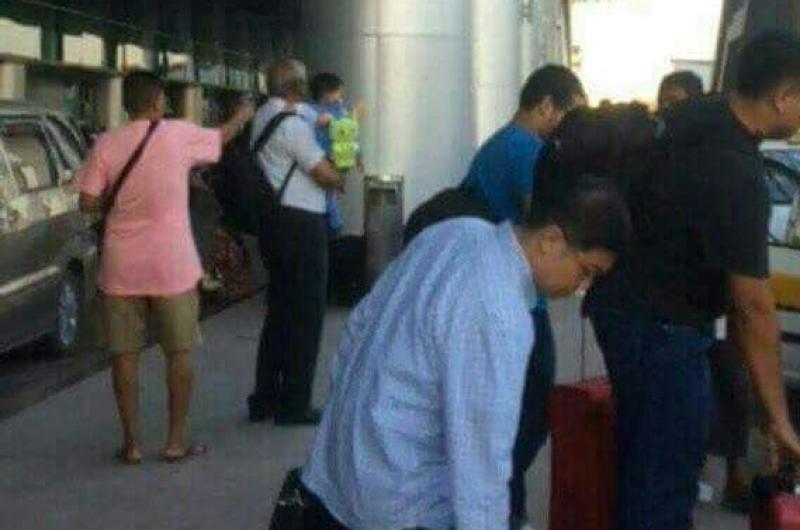
A photo by an anonymous user posted on Facebook shows U Ko Ni holding a child at Yangon International Airport moments before he was assassinated
The charter barred Suu Kyi from the Presidency through her earlier marriage to a UK national and her adult children’s UK citizenship. However, Ko Ni uncovered a loophole in the constitution that allowed for the creation of the new position of “State Counsellor.” The role made it possible for her to lead her administration, ranked second after the President and above the military chief at number eight.
Yet his public push for constitutional change essentially put a military target on his back.
Those mourning his death noted that in the days after his killing, Suu Kyi did not speak out, nor was she amongst the thousands at his funeral. The NLD likely believed that signs of solidarity with Ko Ni were dangerous, and that her government’s delicate balance of power with the military could fall through at any time. Despite concessions and accommodations made to the armed forces, it still collapsed.
While the world applauded Myanmar’s perceived “democratic transition,” the military had ensured its longevity as a political player within the text of the constitution that Ko Ni, along with a range of civil society organisations and rights activists, had challenged. It is in this charter that the seeds of a later coup were arguably planted.
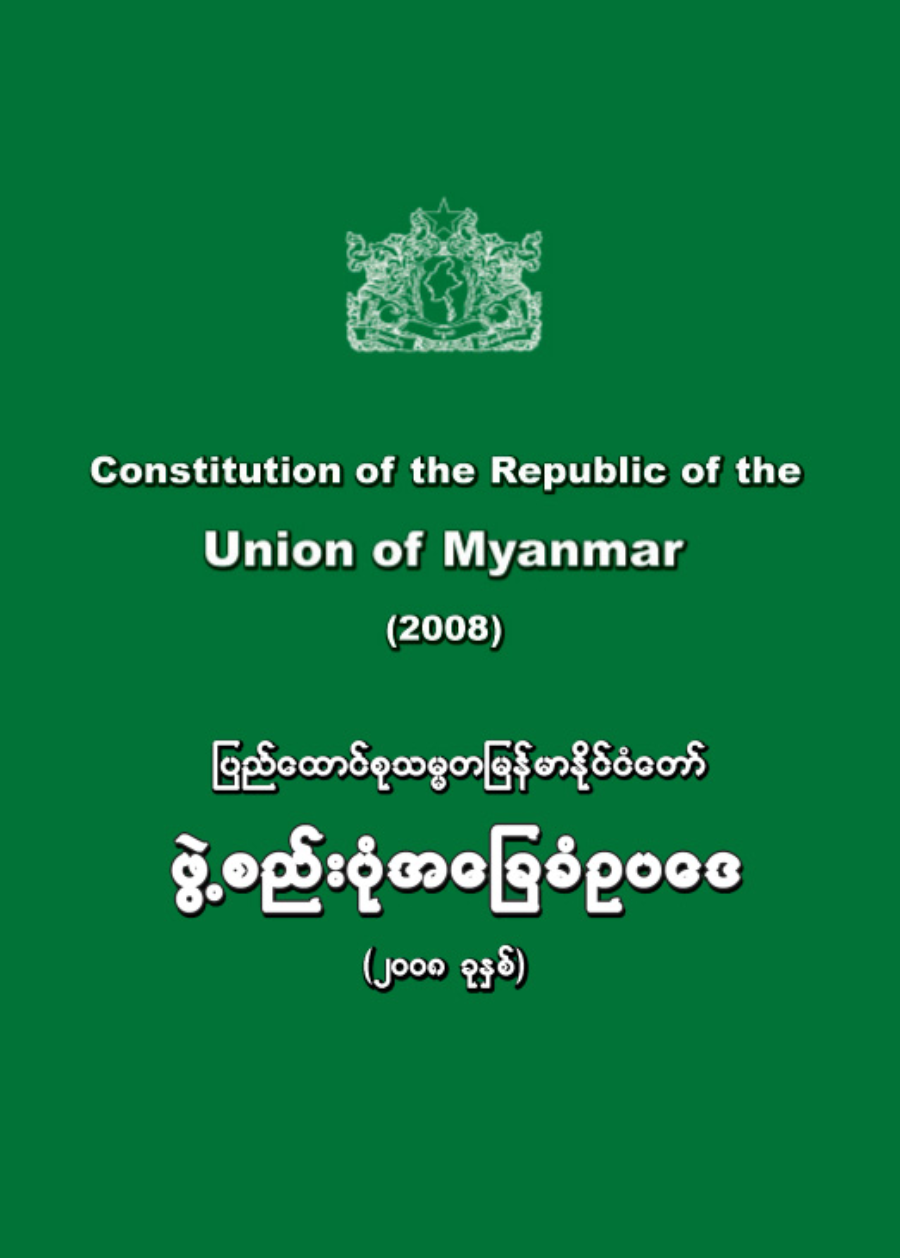
Drafted under a military regime headed by Senior-General Than Shwe, this charter was carefully devised to ensure that the armed forces remained Myanmar’s dominant political power, even after future elections
Tap on the constitution to see details.
In this first article in a series of three, we trace the course from decades of outright military dictatorship to the hybrid administrations that followed, until tanks rolled into Naypyitaw to attempt another direct seizure of power on February 1, 2021.

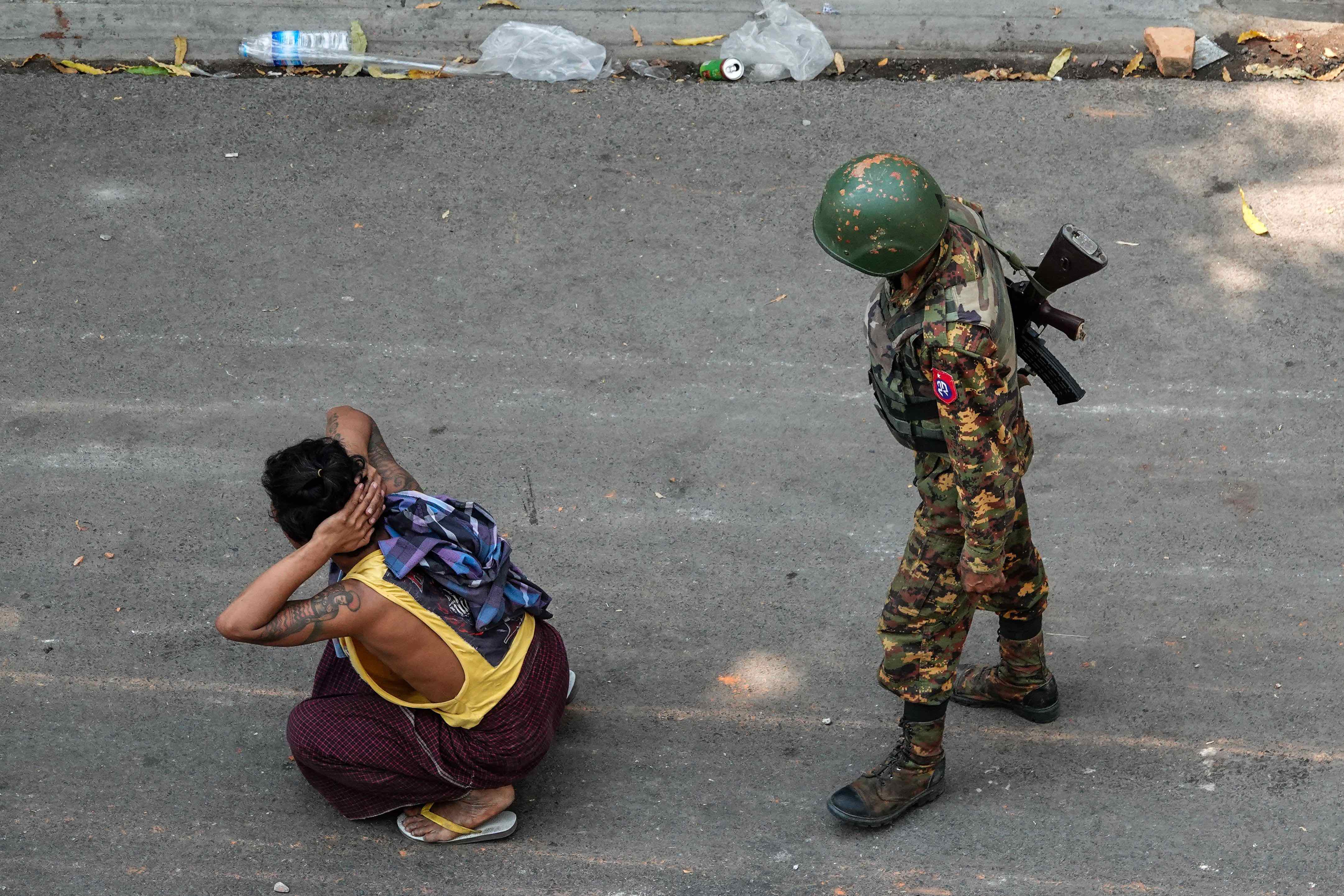
A soldier stands next to a detained man during a demonstration against the military coup in Mandalay in March 2021 (Photo: STR / AFP)
The military’s grip on power
Since its 1948 independence from Britain, Myanmar’s politics has been defined by dictatorship, save for a brief dalliance with democracy in the 1950s that ended with a 1962 military coup led by Gen Ne Win.
In the decades that followed, Myanmar’s people suffered under a brutal regime of extreme repression targeting political opponents and ethnic populations. Major military offensives terrorised and displaced civilians across the country’s ethnic states, often coinciding with land grabs and a seizure of these areas’ lucrative natural resources. Widespread atrocities were committed by the military during these campaigns, ranging from extrajudicial killings to torture to sexual violence to arson and more. Dozens of ethnic armed and political organisations formed in opposition to the imposition of Bamar supremacy and military rule.
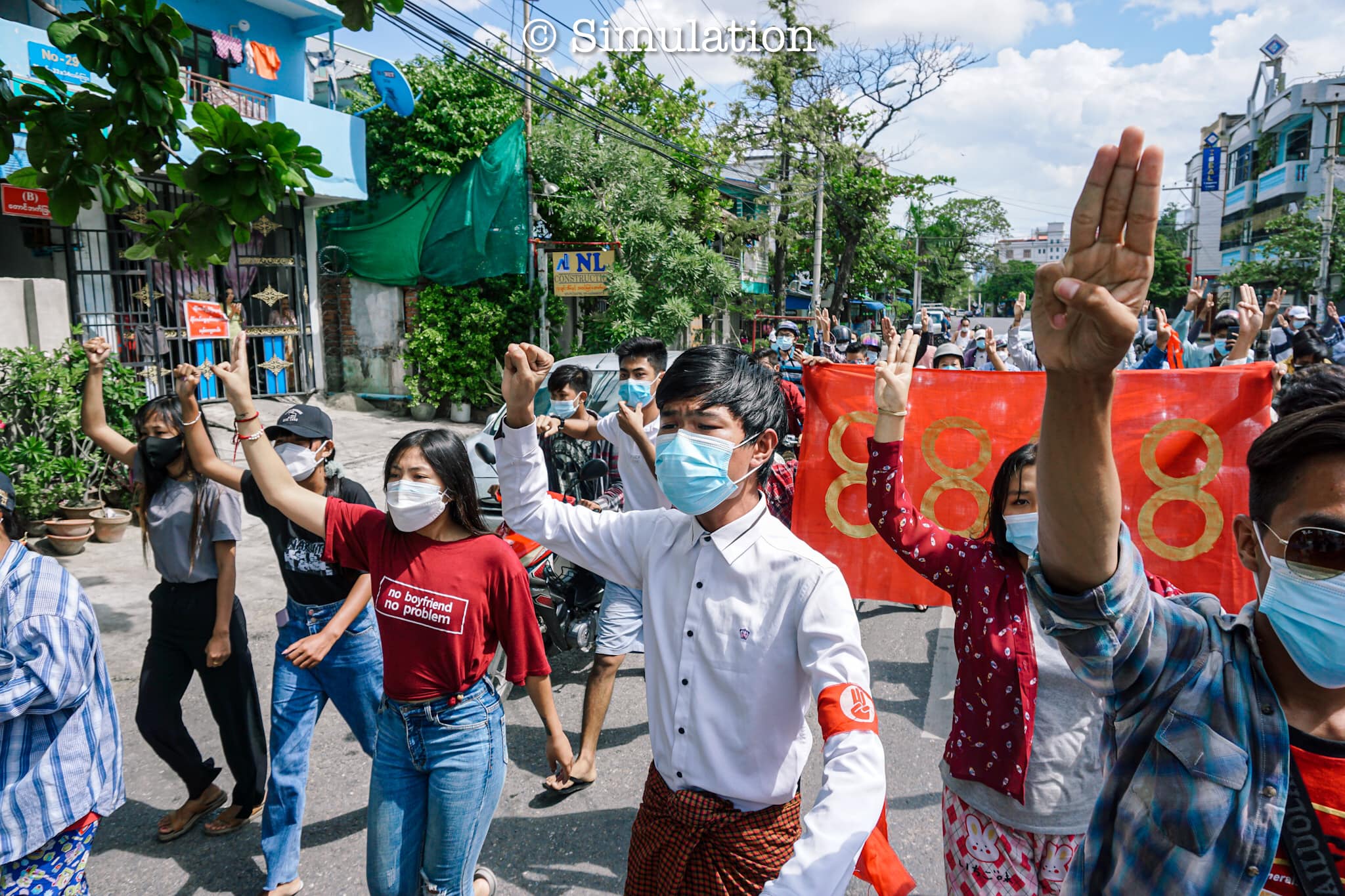
Protesters march in Mandalay in August 2021 to mark the 33rd anniversary of the 1988 uprising (Supplied)
Nationwide student-led protests erupted in 1988, with the public calling for an end to military subjugation and dire economic conditions. The military responded by killing and jailing thousands of civilians, particularly in urban areas. Many protesters and young activists fled to the jungles to form new resistance groups or join existing ethnic armed forces.
The military held what were considered surprisingly free and fair elections in 1990, in which the NLD—then a new party—competed and won by a landslide. However, the army refused to relinquish power, instead forcing the pro-democracy movement underground.
During the 1990s, the military signed bilateral ceasefire agreements with some 40 ethnic armed organisations and pro-government militias. While some of the groups in question were major forces in Kachin and Shan states, many of the groups had not engaged in active conflict with the Myanmar army.
Those who opted to sign a truce were rewarded with business deals often involving natural resource extraction or trade in narcotics; the arrangements meant that the military could pursue a strategy of divide-and-rule, instead diverting its campaigns to target groups which continued to resist. In this way, the military maintained its hold on power, and continued its efforts to crush those that threatened it.

A new military administration
The administration of Than Shwe, the senior general who chaired Myanmar’s military regime from 1992 until 2011, was responsible for creating the 2008 Constitution that allowed a transition from direct dictatorship to a different type of military administration designed to attract international interest after decades of isolation.
Following military-controlled elections in 2010—boycotted by the NLD and widely criticised by observers as being neither free nor fair—the military-backed Union Solidarity and Development Party (USDP) launched an administration headed by ex-general Thein Sein.
In accordance with Than Shwe’s vision, the same group of men would continue to pull the strings in this “quasi-civilian” government.
2010 Election Results
Widely criticised as fraudulent, the 2010 election resulted in the military-backed USDP winning approximately 80 percent of the available seats in parliament. Several opposition parties submitted formal complaints to the electoral commission, raising concerns about widespread corruption. The ruling junta announced that the election—the first to be held in 20 years—marked the transition from military rule to democracy.
Tap on the map to view the results for each district.
Lower House
Upper House
Than Shwe ensured the stability of military rule following his political exit in 2011, and was careful in choosing his successor. He wanted someone who would not destabilise the delicate power balance, and bypassed several senior officers to appoint Min Aung Hlaing as the armed forces’ new commander-in-chief—the man who would later stage the 2021 coup.
Min Aung Hlaing was then joint chief of staff of the army, navy, and air force, and rose to prominence by overseeing a military offensive in the Kokang region bordering China against the Myanmar Nationalities Democratic Alliance Army that forced thousands of people from their homes.
He had no track record of political leadership. Age was likely a key criterion, according to a retired senior military officer interviewed by Myanmar Now at the time; then 55-year old Min Aung Hlaing would be able to hold his position for the five-year government term until his retirement at age 60, which he would later extend to 65, and then, for life.
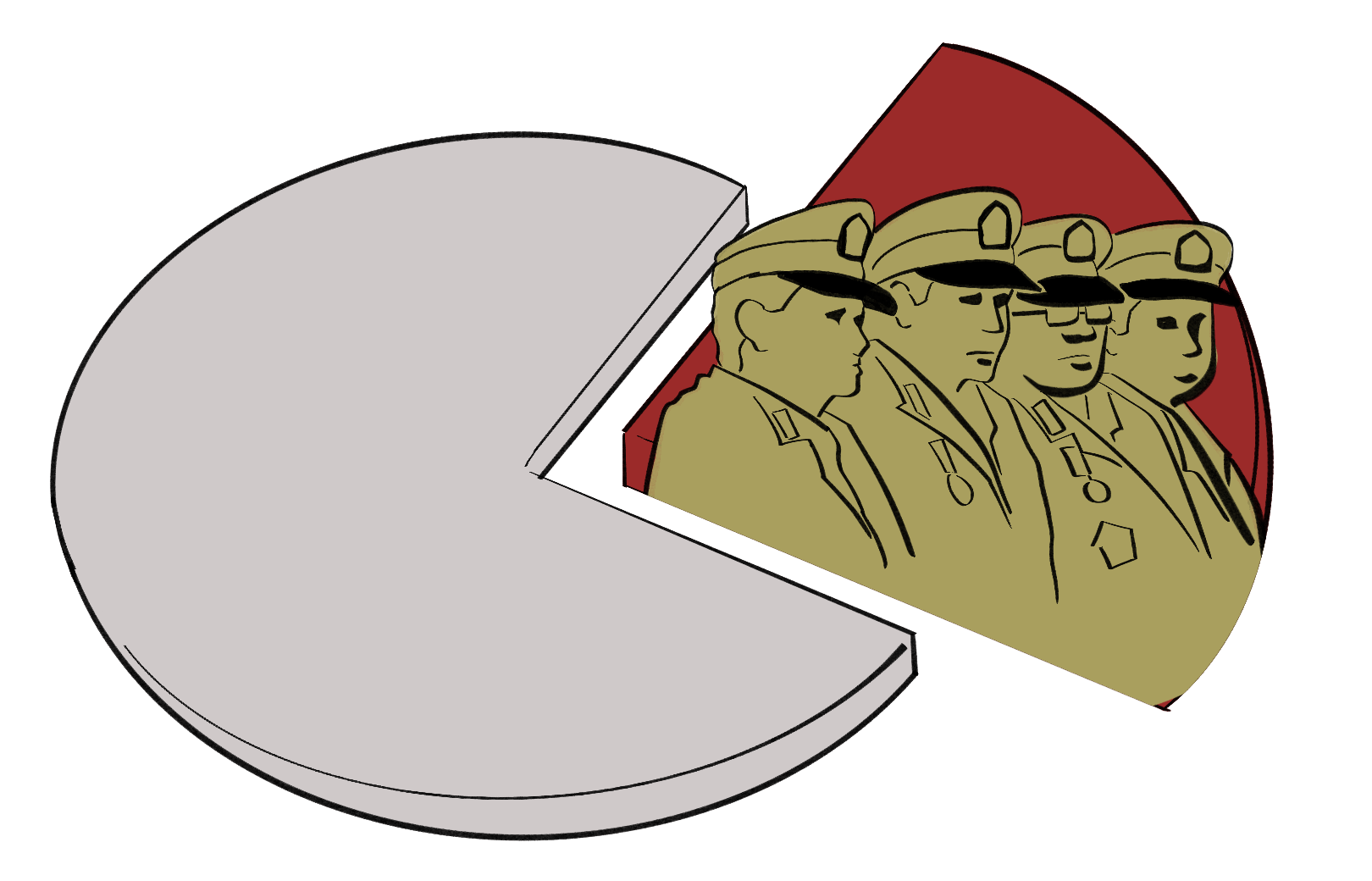
Guaranteed by the 2008 Constitution to retain control of government by winning just 26 percent of elected seats up for grabs—combined with the 25 percent of seats reserved for army appointees—the military was sure it would retain power in the next election in 2015.
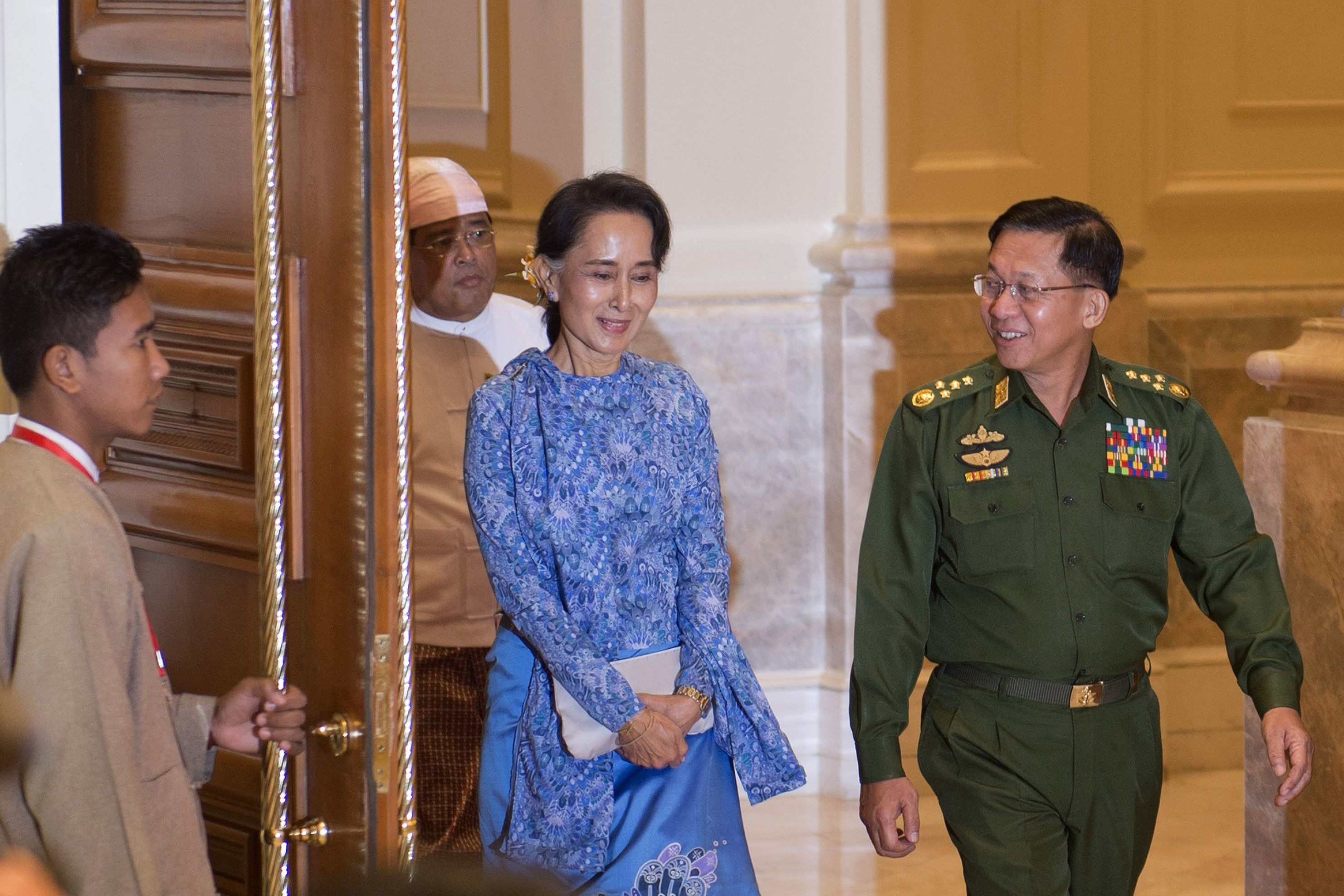
Aung San Suu Kyi and the Myanmar military’s commander-in-chief Senior General Min Aung Hlaing arrive at the presidential palace in Naypyitaw for the handover ceremony on March 30, 2016 (Photo: YE AUNG THU/AFP via Getty Images)
The Thein Sein government therefore took a step that was likely not included in Than Shwe’s transition plan: six months after the USDP took office, the President asked the NLD to cooperate with his administration and re-register as a party.
The expectation was that Suu Kyi would wield limited power, standing only as opposition in parliament.
“I would like to work effectively towards amending the Constitution. So we have to do what we need to do,” she said at the time, opting to participate in the 2012 by-elections. The NLD won 43 out of 45 seats.
With the NLD back in politics, the Thein Sein government received significant economic support from Japan and political encouragement for further reform from the US, and sanctions began to ease. International companies rushed to capitalise on Myanmar’s markets and harvest its natural resources, even as prominent ethnic civil society organisations called for a moratorium on investment until the country had undergone a genuine federal democratic transition.
The reforms of this period, while improving infrastructure and access to communications and technology particularly in urban areas, did not halt the military’s war in the ethnic states, nor did it change the structures that kept the institution firmly in control of politics and the economy.

Military stokes instability after NLD victory
After scoring a sweeping electoral victory in 2015, the NLD held the majority of seats in a new parliament and formed the first civilian-led government in more than 50 years. But the transition was tenuous and Aung San Suu Kyi knew it, advising her party members not to “rock the boat.”
2015 Election Results
The 2015 election resulted in the NLD winning 390 out of 476 seats across the upper and lower houses combined, well above the 322 seats needed for a parliamentary majority. At 79 percent of the vote, this was a landslide victory for the party. The USDP won 41 seats across both houses, at eight percent, a sharp decline from the 342 seats it held before the election. The NLD also won out over ethnic minority parties in most areas, with smaller ethnic-based parties gaining a significant number of votes only in Shan and Rakhine states.
Tap on the map to view the results for each district.
Lower House
Upper House
The NLD leadership was aware that the military was capable of creating a security crisis to justify its intervention in politics, with ultra-nationalist and ultra-religious groups at its disposal.
In October 2016, months after the NLD took office, a previously unknown armed group, the Arakan Rohingya Salvation Army, was said to have launched attacks on the military’s border guard posts in Rakhine State’s Maungdaw Township. The group was then named as being behind alleged attacks on dozens more security posts in August 2017. In response, the military launched a massive scorched earth campaign against the ethnic Rohingya Muslim population of the region, committing grave human rights violations, and displacing more than 700,000 people to neighbouring Bangladesh in what would be termed a genocide by the United States.
The military proposed a National Defence and Security Council (NDSC) meeting and called for the President to declare a state of emergency in Rakhine State. The convening of the NDSC would bring about the constitutional means by which executive power would be temporarily transferred from the President and the NLD to the military’s commander-in-chief, Min Aung Hlaing.
Aware of the threat to its government, the NLD avoided this, instead holding a special cabinet meeting. Aung San Suu Kyi was widely condemned by international rights advocates for her cooperation with the military during their brutal campaign against the Rohingya.
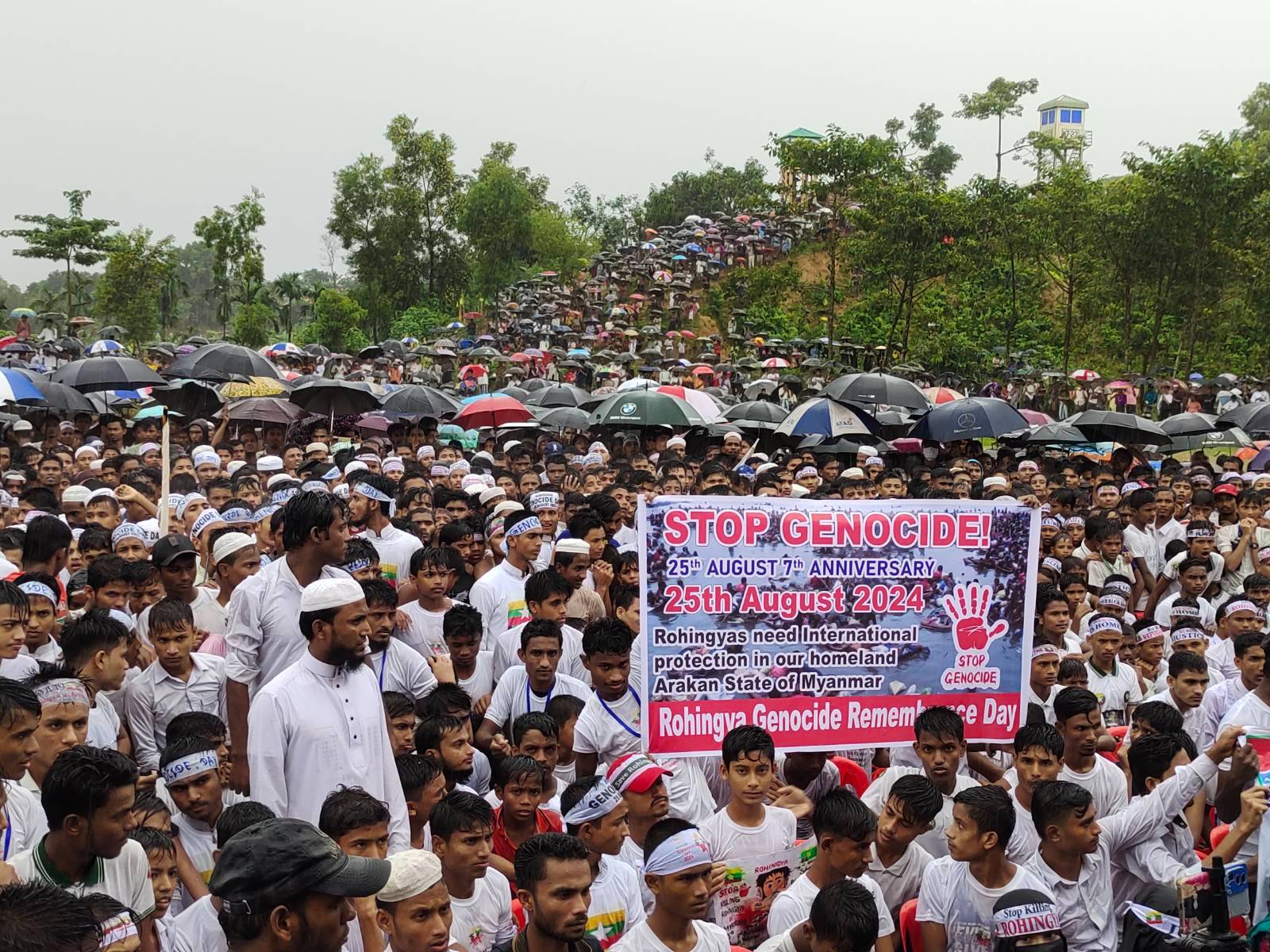
Rohingya refugees in Bangladesh hold a banner at an protest held to mark Rohingya Genocide Day, August 2024 (Mohammed Zonaid / Myanmar Now)
Tension between the NLD and the military boiled over at several points during the NLD’s term. In early 2019, the NLD made its first official move towards its election promise to change the 2008 Constitution, forming a 45-member parliamentary committee to propose democratic amendments to the charter.
This angered military lawmakers, who felt that the NLD had pushed them into a corner to vote on the draft bills, which exposed the military’s position to the public at a critical time before the 2020 election.
In August 2020, the rift between Min Aung Hlaing and Aung San Suu Kyi was on display during a meeting termed the 21st Century Panglong Peace Conference, named for talks held with ethnic nationality leaders ahead of the country’s independence from colonial rule. Suu Kyi raised the issue of constitutional reform at the event, while Min Aung Hlaing’s address implied that the NLD was using the peace talks to forward its own interests.

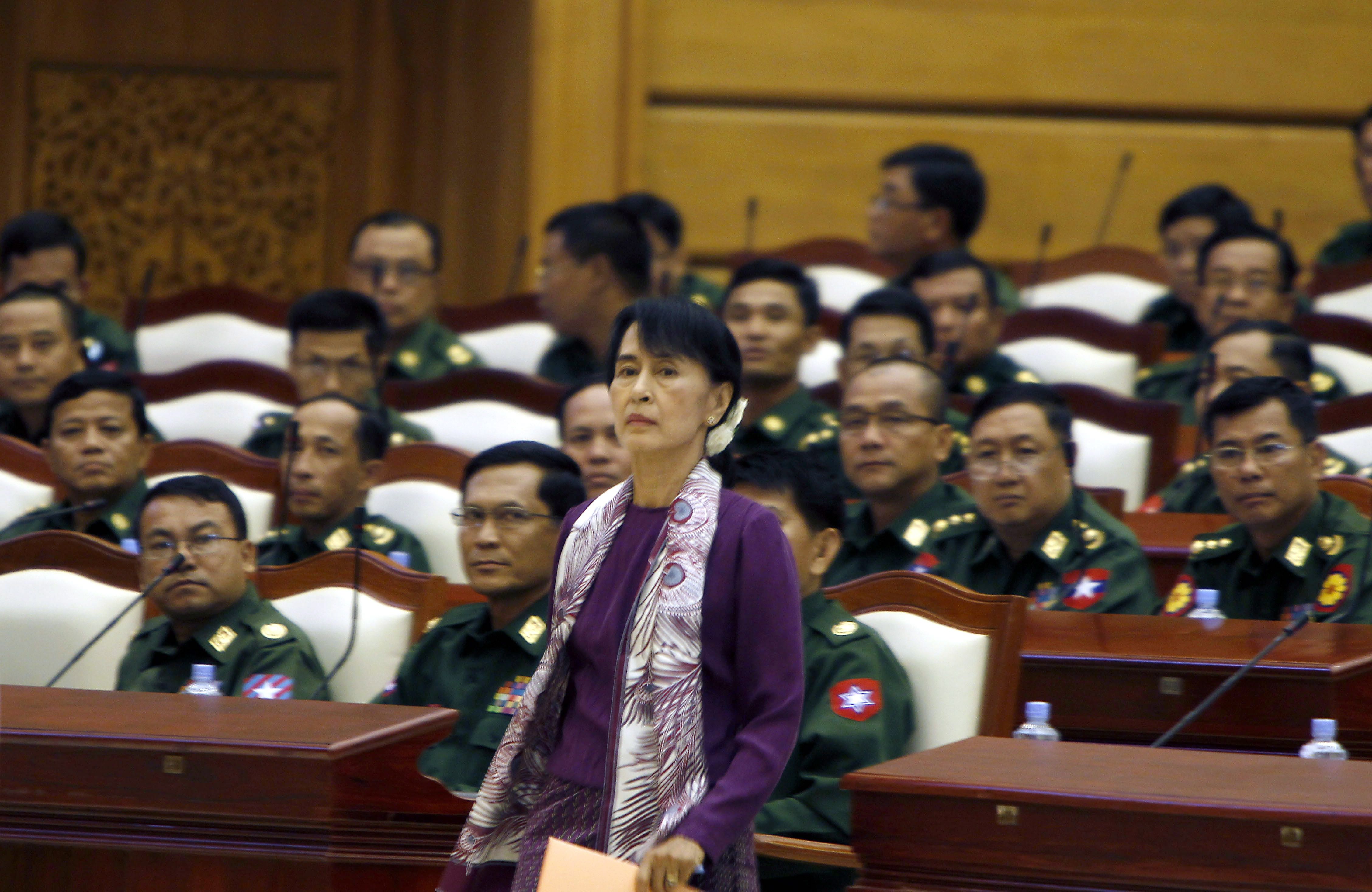
Aung San Suu Kyi stands in front of military representatives on the day she was sworn into parliament, May 2, 2012 (Photo: EPA/NYEIN CHAN NAING)
Signs of a coup
The months leading up to Myanmar’s November 2020 election brought clearer signs of a possible coup when the army began questioning the credibility of the upcoming poll.
Min Aung Hlaing called a meeting in August with the heads of 43 political parties, mostly allies of the military-backed USDP. Party leaders asked him for “assistance” in the event of electoral fraud. “There is nothing I dare not do,” he said.
In September, the USDP and 24 other political parties demanded that the Union Election Commission (UEC) postpone the scheduled vote, citing rising Covid-19 infection rates. Under the 2008 Constitution, the UEC—which the majority party in parliament appoints every term—is in full control of the electoral process and the handling of election disputes.
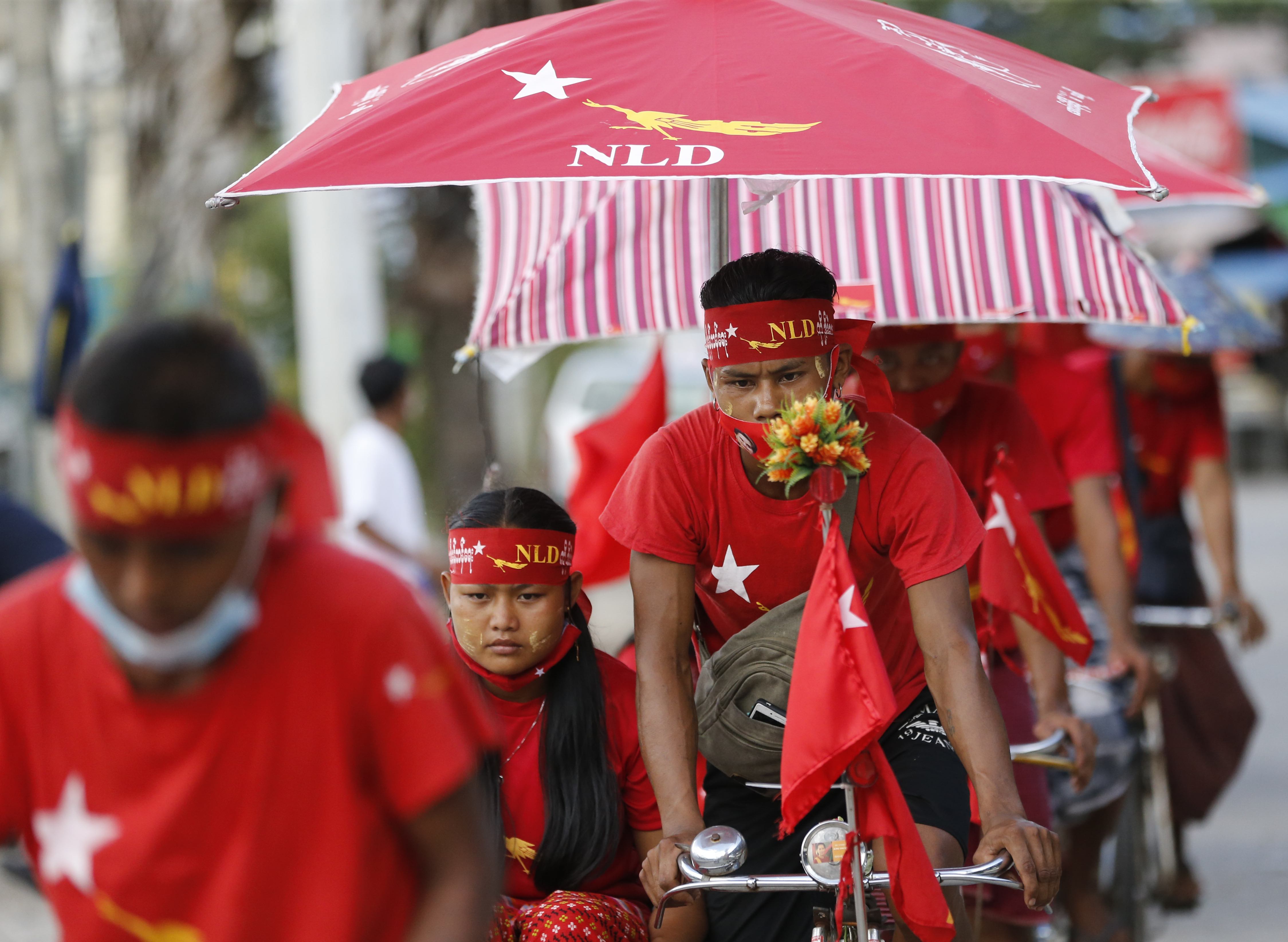
Trishaw drivers participate in an NLD election campaign rally in Yangon amid a surge of the COVID-19 virus, September 2020 (Photo: EPA-EFE/LYNN BO BO)
One week before the vote, the military issued a statement blaming the UEC for errors in voter lists and warning that the NLD government would be held accountable.
The UEC responded by saying that the military had no constitutional jurisdiction to interfere. In granting the UEC full constitutional control of the electoral process, it is believed that Than Shwe had not anticipated the USDP losing control of the UEC following the NLD’s re-emergence.
The NLD won an overwhelming majority again in 2020. The military accused the NLD of voter fraud, with its allegations ramping up in the weeks leading up to the early 2021 coup. On 28 January 28, 2021, the UEC rejected the allegations of fraud on the basis that there were no errors widespread or credible enough to discredit the election results.
2020 Election Results
The NLD won a total of 396 out of 476 seats across both houses in the 2020 election. At over 83 percent of seats, this surpassed the party’s huge majority secured in 2015. The USDP came second, winning a total of 33 seats. Smaller ethnic parties including the Arakan National Party and the Shan Nationalities League for Democracy won the remaining seats.
Tap on the map to view the results for each district.
Lower House
Upper House
Two days earlier, when asked if the military would rule out seizing power in the event that its allegations were not pursued by the electoral authorities, spokesperson Zaw Min Tun said, “We can’t,” before adding, “I am neither saying the military will seize state power, nor that it won’t.”
“As ultranationalist groups began staging pro-military rallies around the country and armoured vehicles started appearing in the streets of Yangon and other cities, it became clear that something was about to happen,” a Myanmar Now reporter later wrote, reflecting on the year of resistance that would follow. “And then it did, on February 1, 2021, the day that parliament was set to reconvene under a second NLD administration.”
The military’s allegations of election-rigging became the justification for the coup and the declaration of a national emergency, motivated by the commander-in-chief’s desire to ensure military supremacy and control civilian politics.
Timeline of events leading up to the coup
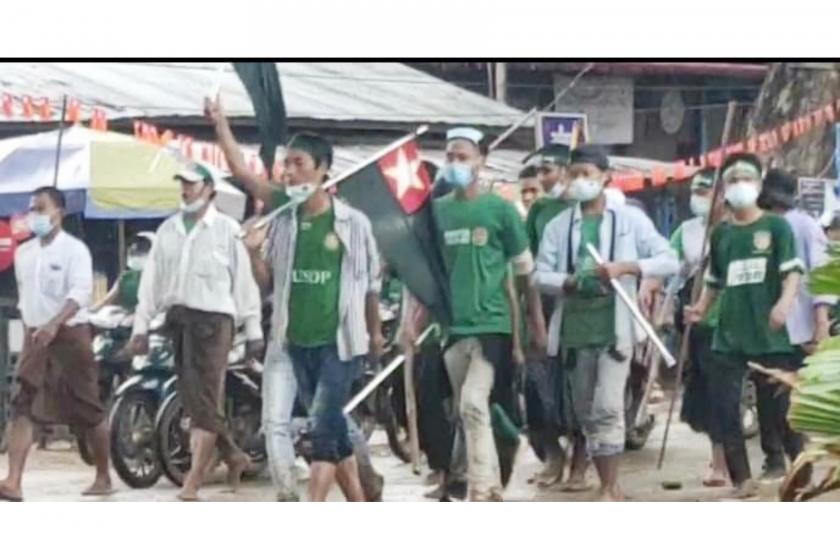
1 November 2020
Violent events happening in the months leading up to the 2020 elections
Nationalists and pro-USDP mobs take to the streets in different parts of the country, instigating violence against NLD supporters
Further Reading:
- Ma Ba Tha nationalists hold pre-election rally to ‘protect national religion’
- 26 USDP supporters face charges after clash with NLD rivals in Hinthada
- USDP mob beats NLD supporter to death during clash in Sagaing
- Police arrest 19 after pro-USDP mob attacks home of NLD member in Magwe
- USDP campaigners pelt NLD supporter’s home with rocks in Meiktila
8 November 2020
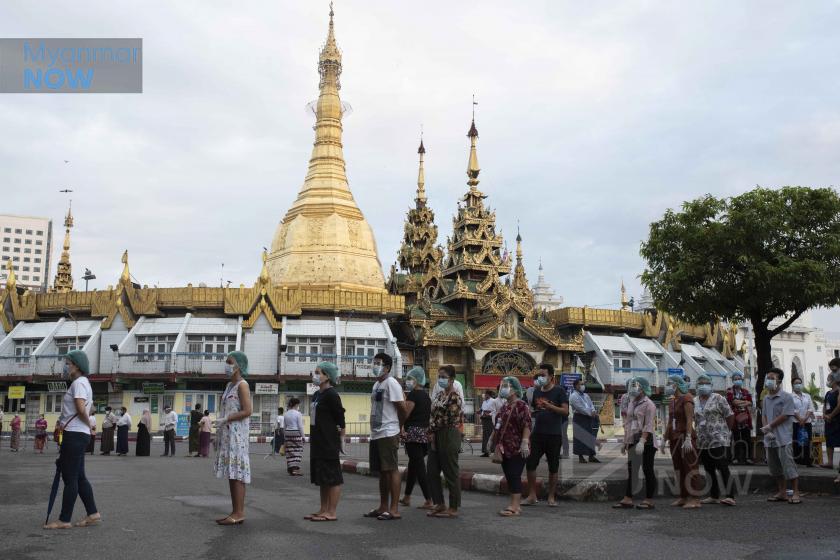
General elections take place
Further Reading:
8 November 2020
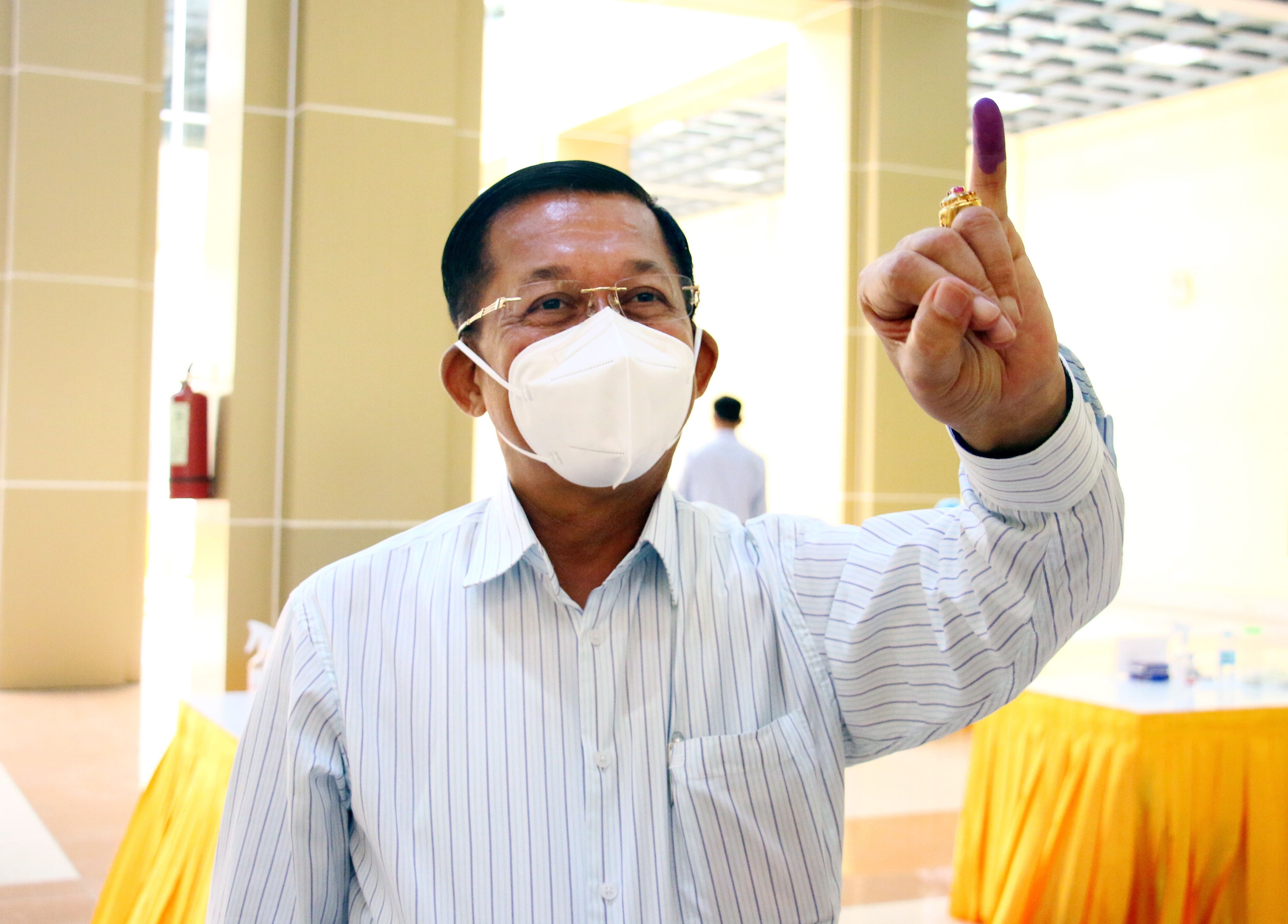
MAL says he will respect the results
After casting his vote in Naypyitaw’s Zeya Thiri township, the commander-in-chief promised to respect the outcome of the election. “I’ll have to accept the people’s wish and the results that come with it,” the Senior General told reporters outside the polling station.
Further Reading:
15 November 2020
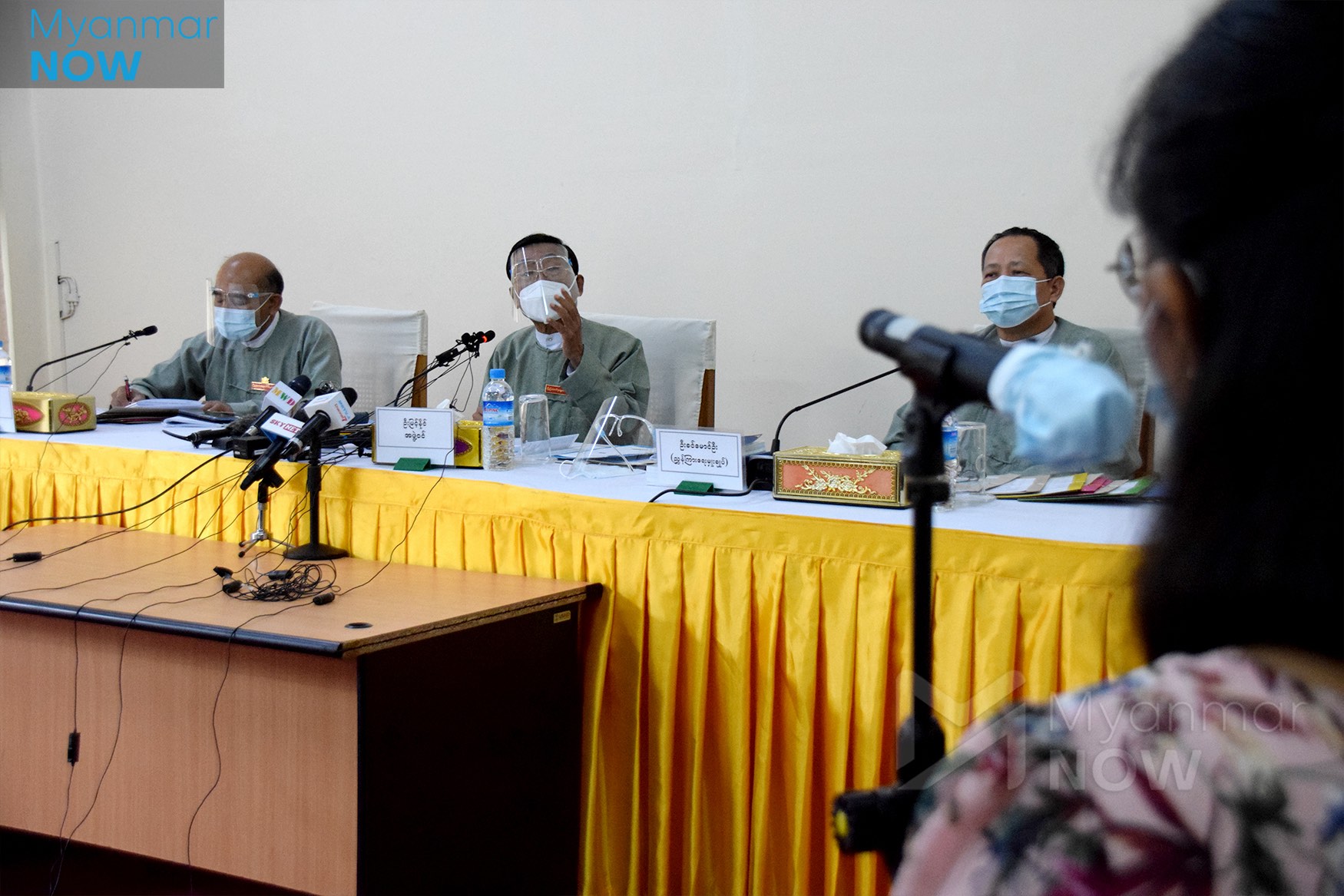
The UEC publish the official results of the election
The military-backed USDP rejected the results and immediately waged a campaign to discredit the election, accusing the NLD of widespread errors in voter lists.
15 January 2021
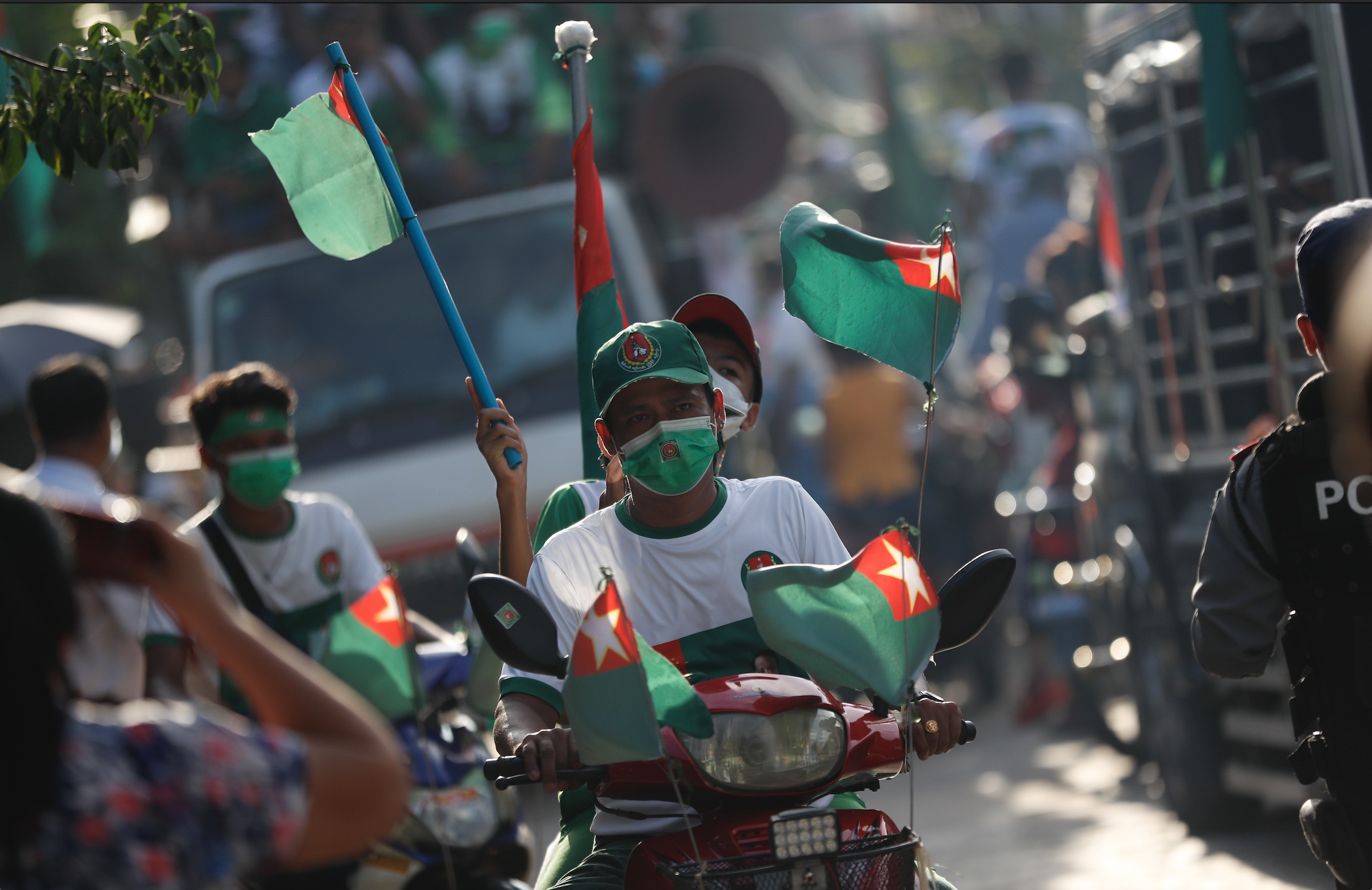
USDP rallies after the election that turned violent
Following the November election, pro-military protests started taking place around the country in support of the military’s bid to overturn the election result.
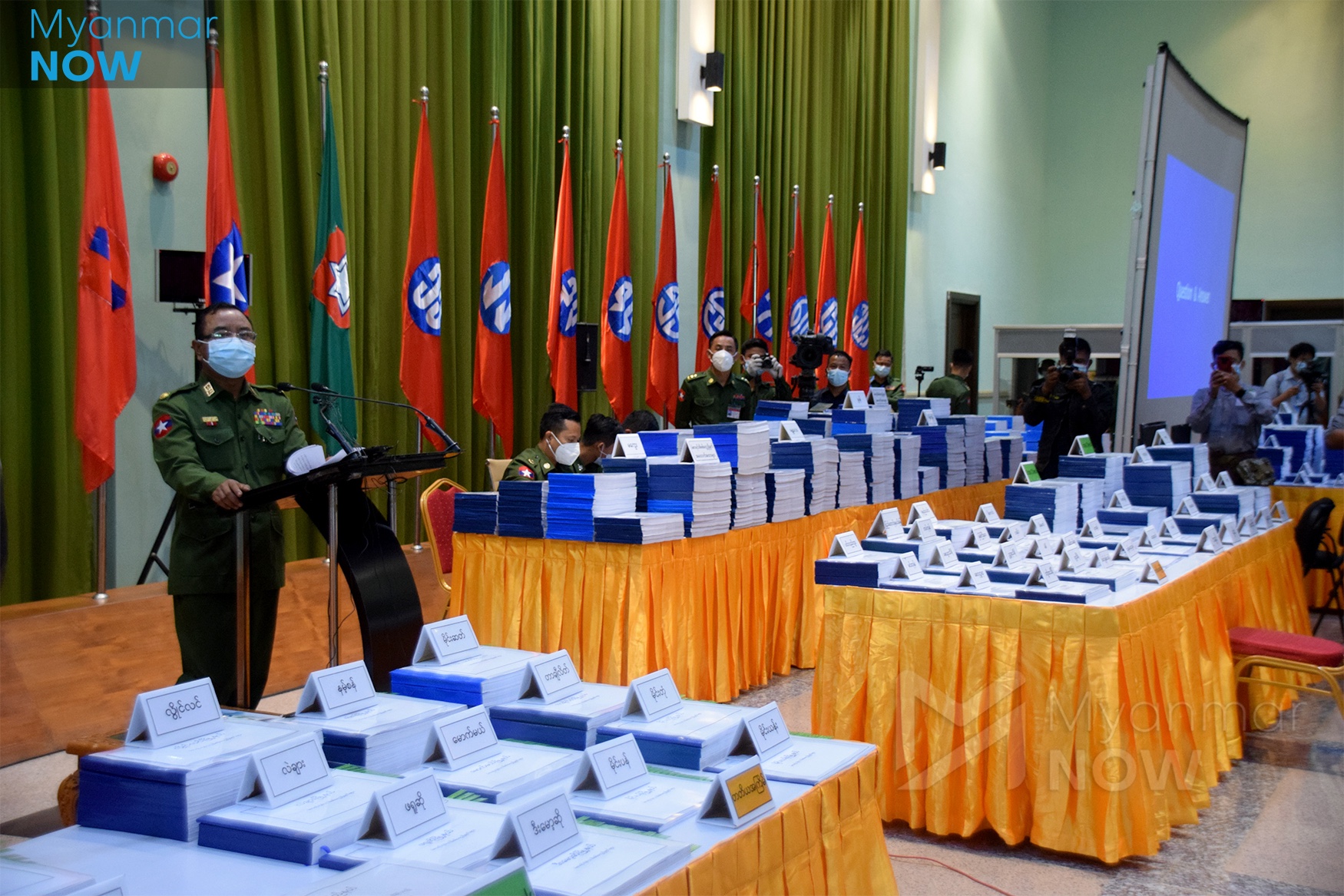
26 January 2021
Military hold press conference claiming voter list mistakes
The military called a press conference in Naypyidaw where they claimed to have found “over 8.6 million” irregularities on voter lists. While the allegations were made by military spokesperson Brig-Gen Zaw Min Tun as he stood before stacks of documents containing the purported findings, no direct evidence of the alleged fraud was provided. In the weeks prior to the press conference, the military had issued a total of 29 statements about its “findings” from the voter lists.
Further Reading:
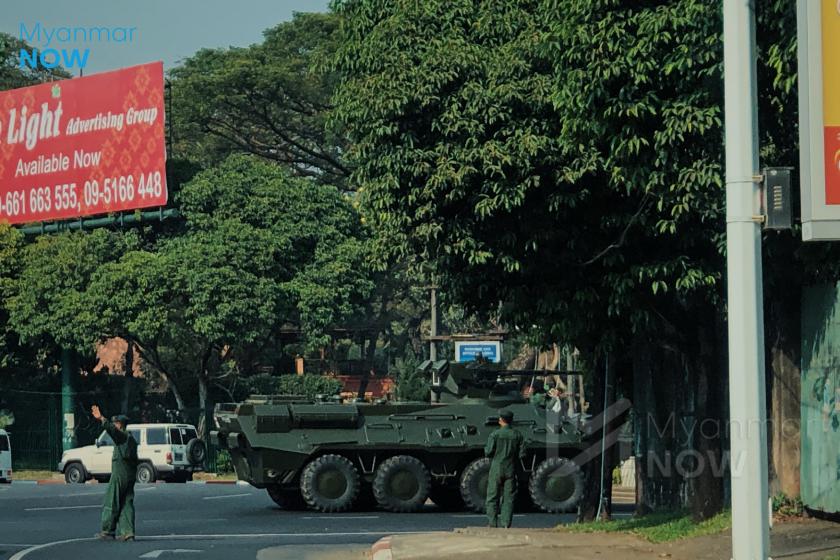
29 January 2021
Armoured vehicles start rolling into cities
Tanks started appearing on the streets of Yangon and other urban areas in the days before the results of the election were set to go into effect in parliament.
Further Reading:
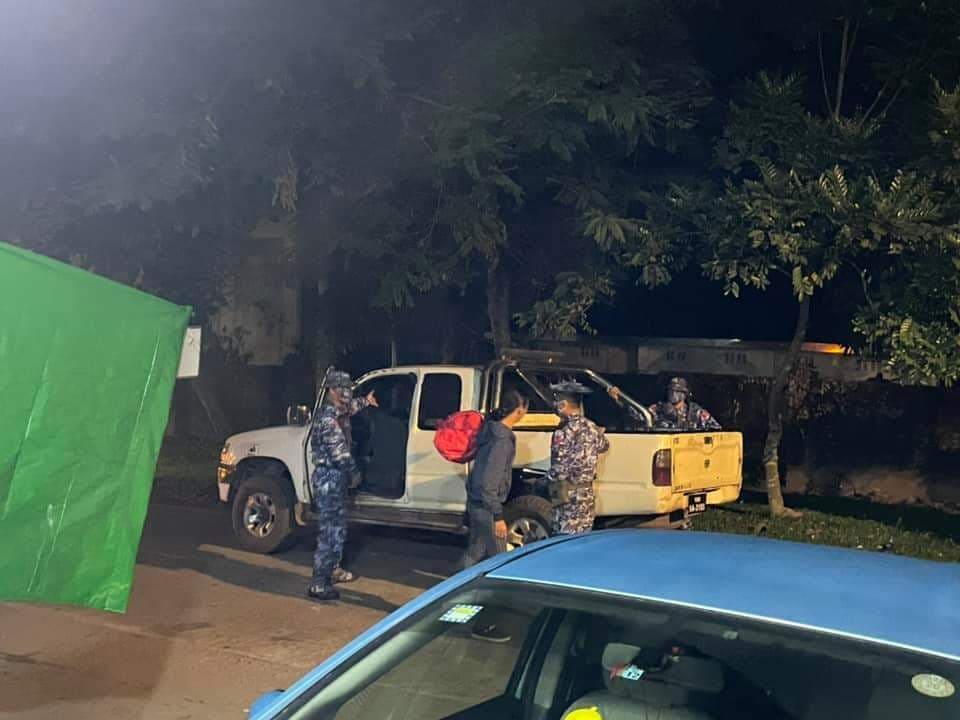
1 February 2021
Coup happened the night right before parliament is scheduled to convene
In the early hours of February 1st, when members of the new NLD-led parliament were set to be sworn in, leaders of the civilian government including State Counsellor Aung San Suu Kyi and President Win Myint were arrested by the military in a series of raids. State TV announced that power had been handed over to the commander-in-chief.
Further Reading: